

Caitlin Raymond: When We Talk About Plasma Exchange, Most Discussions Stop At What We’re Removing, But That’s Only Half The Story
Caitlin Raymond, a board-certified Clinical Pathologist and current Transfusion Medicine Fellow at the National Institutes of Health, shared on LinkedIn:
”The Overlooked Half of the Exchange
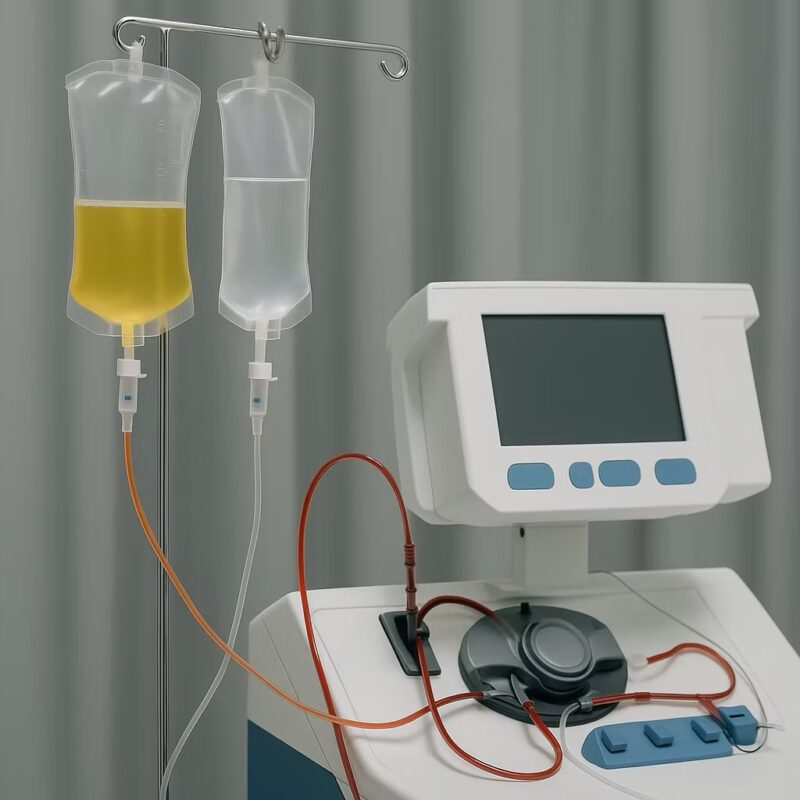
When we talk about plasma exchange, most discussions stop at what we’re removing — antibodies, paraproteins, cytokines. But that’s only half the story.
Replacement fluid is the other half — and it quietly dictates safety, hemostasis, and recovery.
The right choice isn’t just technical; it’s clinical judgment in action.
In my latest blog post, I break down:
- When to use albumin vs. plasma, and why the timing matters
- How combination strategies (like 50:50 albumin–FFP) can balance practicality and bleeding risk
- Common myths and misconceptions — including why “albumin is always safer” isn’t true
- Real-world scenarios: TTP, transplant desensitization, AMR, and more
Read the full post.
Choosing the replacement fluid isn’t just following a protocol — it’s the art within the algorithm.
Because in apheresis, the machines may be automated, but judgment isn’t.”
Stay tuned for more posts on transfusion medicine featured in Hemostasis Today.
-
Oct 6, 2026, 13:10Vinicius Fornazari: New Perspectives In Interventional Radiology From SOBRICE
-
Oct 6, 2026, 12:39Sarah Garvey: Putting The Patient Experience At The Heart Of VTE Care
-
Oct 6, 2026, 12:33Platelets Without Donors: Can Freeze-Dried Artificial Platelets Transform Trauma Care?
-
Oct 6, 2026, 12:03Louise St. Germain Bannon: Supporting the World Thrombosis Day
-
Oct 6, 2026, 11:39Joining the Hemophilia and Bleeding Disorders Community at the EHC 2026 – WFH
-
Oct 6, 2026, 10:56Moustafa Abdou: LE Cells and the Early Diagnosis of Lupus
-
Oct 6, 2026, 10:35Caitlin Raymond: Understanding IgA Deficiency and Anaphylaxis Risk
-
Oct 6, 2026, 10:15Zeeshan Ali Baig: AI-Designed Peptide for Rare Bleeding Disorder
-
Oct 6, 2026, 10:12Srivatsan Rangachari: Stem Cell Transplant for 12-Year-Old with Fanconi Anaemia