


You Need to Have an Abnormal Haemoglobin to Have a Haemoglobinopathy. Or Do You?
Daniel Pereira Monteiro, NHSE Screening Professional Clinical Advisor, posted on LinkedIn:
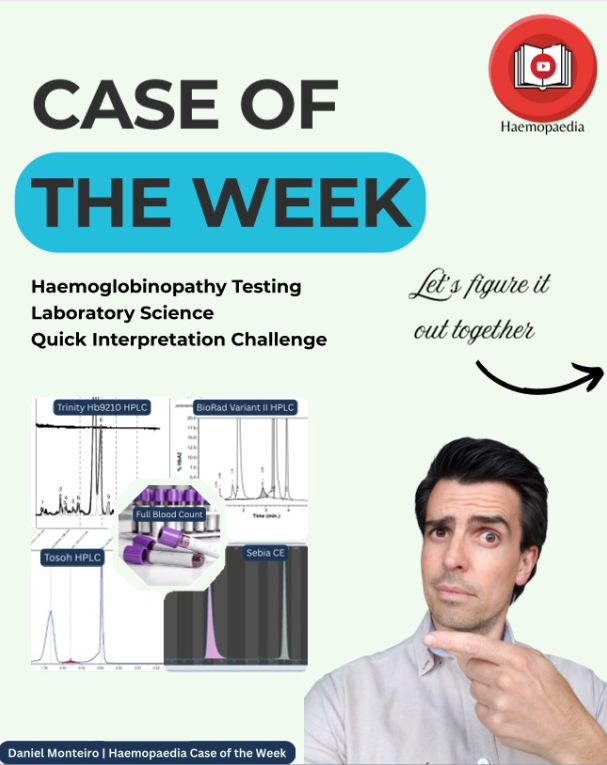
”You need to have an abnormal haemoglobin (variant) to have a haemoglobinopathy. Or do you?
Let’s test your interpretation skills
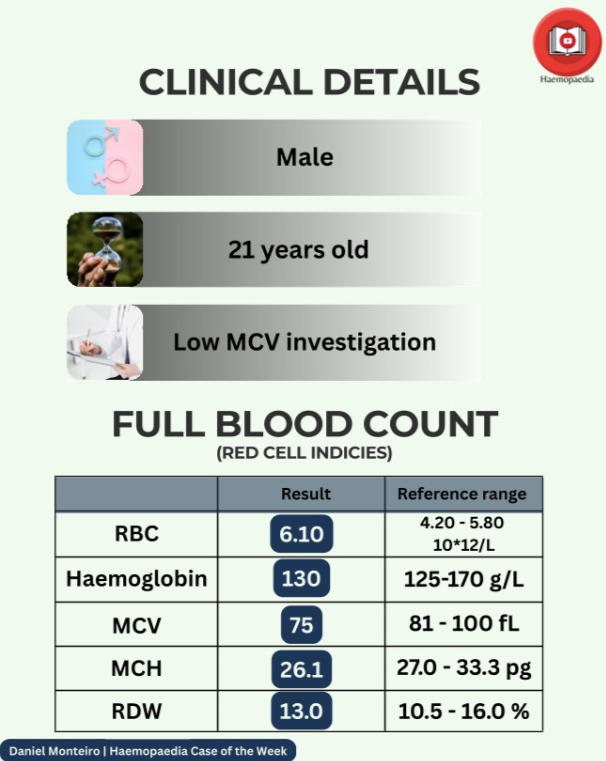
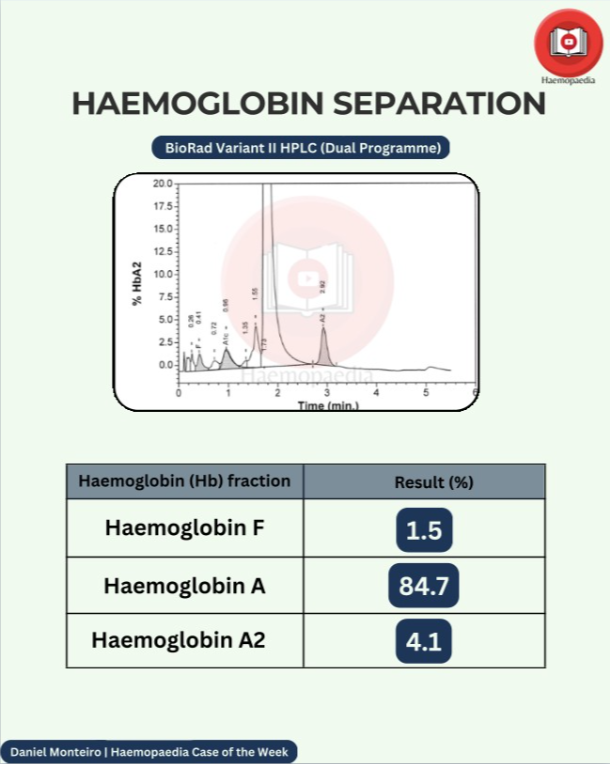
How would you report this case? Does it need any further testing?
Welcome to the Haemopaedia Case of the Week
A quick haemoglobinopathy interpretation challenge designed to support your weekly CPD.
Drop your interpretation below – I’ll share the answer on Friday so everyone has time to participate.
If you’d like to receive updates about upcoming training sessions, webinars and case-based learning, you can join my Training Hub list here.
You can unsubscribe at any time.
Have a case you’d like featured? DM me to share an anonymised example for future posts.
Bio-Rad Laboratories
Institute of Biomedical Science
Disclaimer:
All cases shared in these series are for educational purposes only and do not constitute clinical or diagnostic advice.
Contributors are reminded to ensure all examples are fully anonymised and shared in accordance with their local governance and confidentiality policies.”
Keep up with Hemostasis Today.
-
Oct 20, 2026, 05:11Giuseppe Lippi։ Understanding Liver Test Abnormalities After AAV Gene Therapy
-
Oct 20, 2026, 05:02Sanam Loghavi: Test Your Hematology Knowledge at ASH 2026!
-
Oct 20, 2026, 04:13Ifeanyichukwu Ifechidere: DOACs Are Not the Answer to Every Anticoagulation Question
-
Oct 20, 2026, 04:04Sadia Kamal: Honored to Receive the Outstanding Abstract Award at the 20th Midwest Platelet Conference
-
Oct 20, 2026, 04:03Yu-Hsuan Chen: One Antibody, Two Diseases from FcRn Biology to Clinical Translation
-
Oct 20, 2026, 03:49Domenico Simone Castiello: Rethinking Prolonged DAPT in Multivessel PCI – Insights from the DAPT-MVD Trial
-
Oct 20, 2026, 03:37Rucha Patil: Scaling POC Diagnostics for Haemophilia A and VWD Across India
-
Oct 20, 2026, 03:31Zena Vexler: Targeting Neutrophil Elastase and NETosis to Mitigate Infection-Triggered Childhood Stroke
-
Oct 20, 2026, 03:24Chaza Alaji: Diagnosing Protein C and Protein S Deficiency