


Atherosclerosis – How Much Does Fitness Really Add to Cardiovascular Risk Assessment?
Atherosclerosis posted on LinkedIn:
”How much does fitness really add to cardiovascular risk assessment?
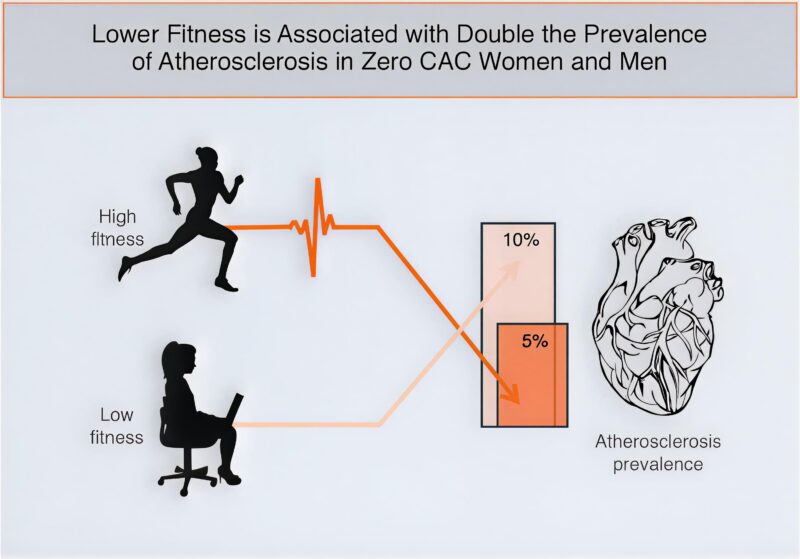
In over 2300 adults with zero coronary artery calcium (CAC) from the SCAPIS cohort, higher cardiorespiratory fitness (CRF) was strongly associated with a lower likelihood of hidden atherosclerosis.
Each 1 ml·kg⁻¹·min⁻¹ increase in CRF → 4.5% lower risk
Adding CRF to SCORE → significantly better prediction
Low-CRF men and women → >100% higher prevalence of plaque
Even when CAC = 0, low fitness still matters.
Could CRF become the next vital sign in preventive cardiology?
We’d love to hear your thoughts – how should fitness be integrated into risk models?”
Read the full article here.
Title: Lower cardiorespiratory fitness is associated with coronary artery atherosclerosis in individuals with a zero CAC score – cross-sectional results from SCAPIS
Authors: Frida Griffina, Jonatan Fridolfsson, Daniel Arvidsson, Elin Ekblom-Bak, Örjan Ekblom, Göran Bergström, Mats Börjesson
Stay updated with Hemostasis Today.
-
Oct 19, 2026, 19:44Where You Live Should not Determine Whether You Receive Care – World Federation of Hemophilia
-
Oct 19, 2026, 19:42Belen Bianco: Prevention, Early Suspicion and an Interdisciplinary Approach Save Lives
-
Oct 19, 2026, 19:40Christina Chrysohoou: Catheter-Based LAAC vs OAC for Stroke Prevention in Atrial Fibrillation
-
Oct 19, 2026, 19:38Matthew Flick: A Two-Day Research Meeting on Fibrinogen, Hemostasis and Thrombosis
-
Oct 19, 2026, 19:37Hayat Saeed: Excited to Share Our Publication on the FGL1–Hepcidin Axis in Iron Homeostasis and Disease
-
Oct 19, 2026, 19:08IPAW 2026 Comes to a Close, but the Work Continues – PPTA
-
Oct 19, 2026, 17:44Paul Riley: Moderating a Webinar on Anticoagulation Monitoring
-
Oct 19, 2026, 16:36Christopher Pittman: Blood Clot Prevention Cannot End at Hospital Discharge
-
Oct 19, 2026, 16:13Javier M. Floren: When Immune Cells Move With Their Environment