


Ney Carter Borges: Evaluating the True Symptomatic Benefit of PCI in Patients with CTO and Stable Angina
Ney Carter Borges, Member Cardiologist of Global Physician Association at Cleveland Clinic Florida, shared a post on LinkedIn:
“ORBITA-CTO Trial — ACC 26
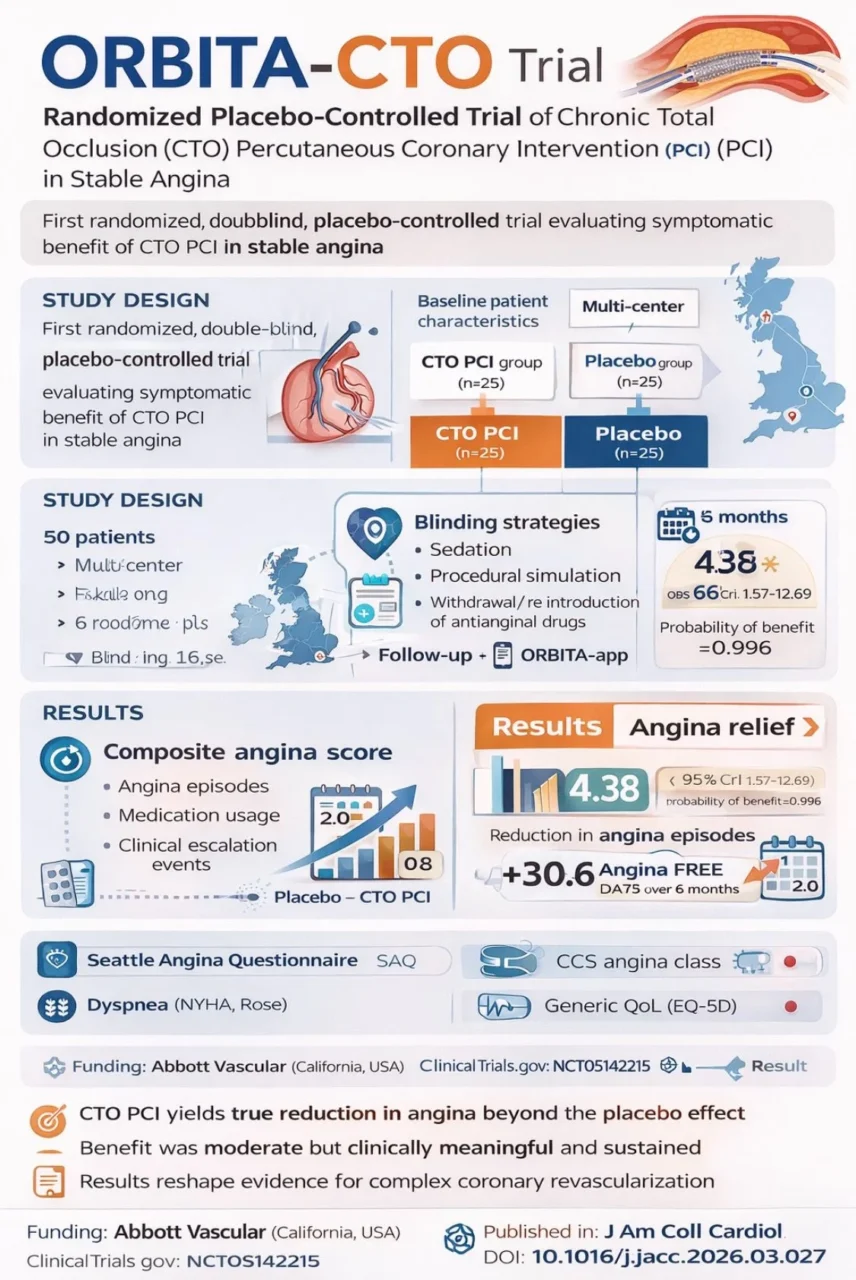
The ORBITA-CTO trial is the first randomized, double-blind, placebo – controlled study evaluating the true symptomatic benefit of percutaneous coronary intervention (PCI) in patients with chronic total occlusion (CTO) and stable angina.
Study Design
This multicenter UK trial randomized 50 patients with single-vessel CTO, documented ischemia, and viable myocardium to either:
- CTO PCI (n=25)
- Placebo procedure (n=25)
A rigorous blinding strategy was implemented using sedation and procedural simulation.
Anti-anginal therapy was withdrawn at randomization and reintroduced as needed.
Patients were followed for 6 months, with daily symptom tracking via a smartphone app (ORBITA-app).
Primary Outcome
The primary endpoint was a composite angina symptom score, integrating:
- Daily angina frequency
- Anti-anginal medication use
- Clinical escalation events
Key Results
CTO PCI significantly improved angina compared with placebo:
- OR 4.38 (95% CrI 1.57–12.69; probability of benefit = 0.996)
Reduction in angina episodes was the main driver:
- OR 4.38 (95% CrI 1.55–11.78)
Patients undergoing PCI experienced:
- Plus 30.6 additional angina-free days over 6 months
Secondary Outcomes
Consistent improvements were observed in:
Seattle Angina Questionnaire (SAQ):
Angina frequency: +10.7 points
Physical limitation: +13.5 points
Quality of life: +18.2 points
Summary score: +13.7 points
CCS angina class improved significantly
No meaningful benefit was seen in:
- Dyspnea (NYHA, RDS)
- Generic QoL (EQ-5D)
Interpretation
This trial provides definitive placebo-controlled evidence that:
- CTO PCI yields a true physiological reduction in angina, not merely placebo effect
- The magnitude of benefit is moderate but clinically meaningful
- Symptom improvement is immediate and sustained
Importantly, a substantial placebo effect was also observed, reinforcing the need for blinded trials in interventional cardiology.
Clinical Implications
- CTO PCI should be considered for symptomatic patients with demonstrable ischemia, especially in expert centers
- Patient selection and shared decision-making remain critical
- Benefits are primarily symptomatic, with no evidence for prognostic improvement
Take-Home Message
ORBITA-CTO establishes CTO PCI as an effective therapy for angina relief beyond placebo, with robust methodological validation – reshaping the evidence base for complex coronary revascularization.”
More posts featuring Ney Carter Borges on Hemostasis Today.
-
Oct 3, 2026, 08:31Víctor S. Rangel: Advanced Endovascular Management in Severe Postpartum CVST
-
Oct 3, 2026, 08:05Are Circadian Rhythms Fueling Thrombotic Risk in Space? – RPTH Journal
-
Oct 3, 2026, 07:43Janez Urevc: Modeling Compression Ultrasound for Internal Jugular Vein Thrombosis in Astronauts
-
Oct 3, 2026, 07:20Adam Wufsus: Novo Nordisk Seeks Medical Liaison for Sickle Cell Disease
-
Oct 3, 2026, 07:16Álvaro Dubois-Silva: Rethinking the Obesity Paradox in Cancer-Associated VTE
-
Oct 3, 2026, 07:09Lori Bryngelson Taylor: Expert Consensus Guidelines Flag Hypophosphatemia Risks With Injectafer
-
Oct 3, 2026, 06:40Aayush Bist: Study Reveals Distinct Social Patterns in Anemia, Excess Adiposity, and High Blood Pressure Among Women in Nepal
-
Oct 3, 2026, 06:39Ahmed Bennis: Understanding the Diagnosis, Risk, and Management of ARN
-
Oct 3, 2026, 06:11Ana Cespedes: Maternal Anemia in Pregnancy Linked to Differences in Infant Brain Structure