

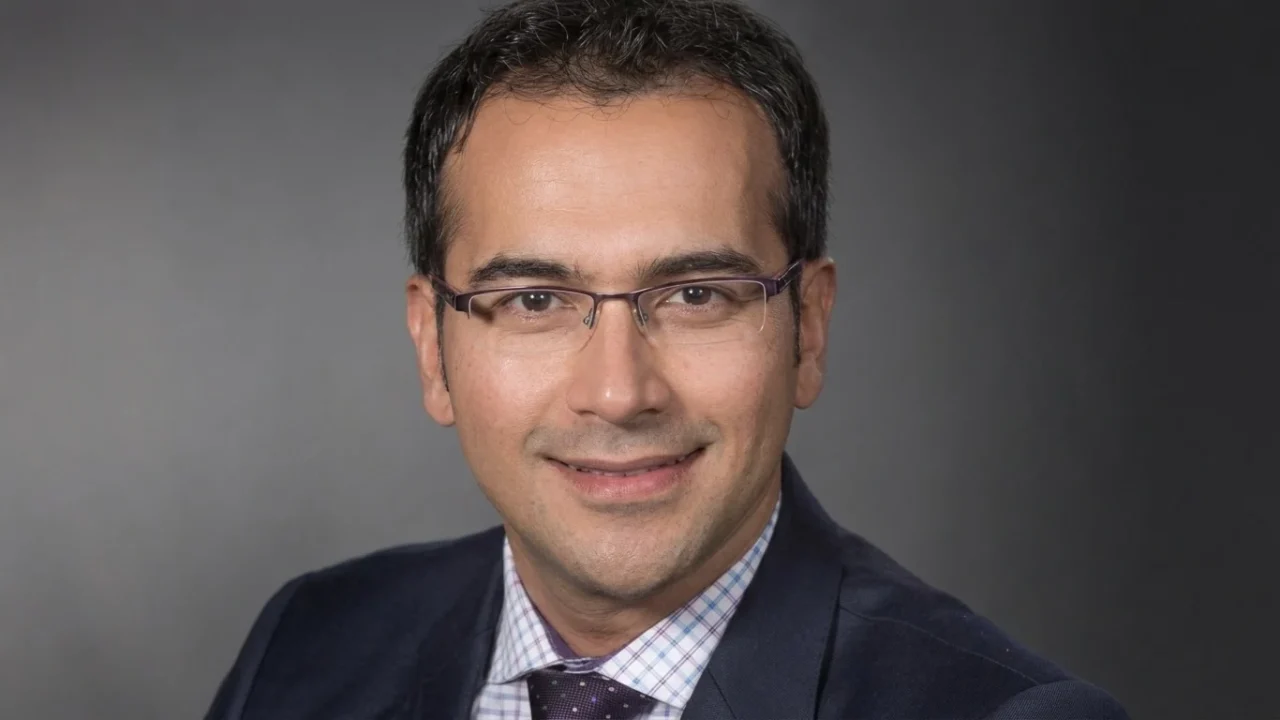
Rohan Arora: Can Artificial Intelligence Improve Informed Consent in Stroke Clinical Trials?
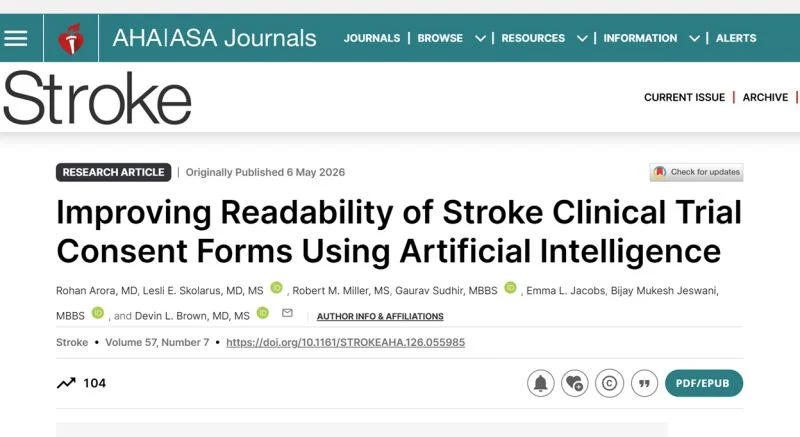
Rohan Arora, Director of Stroke Clinical Trials at Donald and Barbara Zucker School of Medicine, shared on LinkedIn about a recent article he and his colleagues co-authored, published in Stroke, adding:
”Enrolling patients in Stroke Clinical trials continues to be challenging as we are faced with multiple barriers, informed consent being one of them.
Can artificial intelligence help smoothen the process for Informed consent?
Stroke research participants struggle to comprehend complex medical terminology described in consent forms, and this may be even more pronounced among patients with stroke.
Artificial intelligence such as ChatGPT, offers a novel opportunity to simplify and adapt consent language while preserving essential informational content.
In our study, we found that AI-edited versions of publicly available consent forms demonstrated significantly improved readability, lowering the average reading difficulty by approximately 2 grade levels;(11th grade to 8th grade) across multiple validated indices, while maintaining high semantic similarity.
The study highlights high prevalence of elevated reading levels of informed consent documents used in stroke trials and the need to overcome this barrier which may help boost enrollments.
Future research should extend beyond the assessment of readability metrics to prospective studies to assess whether AI-edited consents improve patient understanding.”
Title: Improving Readability of Stroke Clinical Trial Consent Forms Using Artificial Intelligence
Authors: Rohan Arora, Lesli E. Skolarus, Robert M. Miller, Gaurav Sudhir, Emma L. Jacobs, Bijay Mukesh Jeswani, Devin L. Brown
Stay updated on all scientific advances with Hemostasis Today.
-
Oct 19, 2026, 19:44Where You Live Should not Determine Whether You Receive Care – World Federation of Hemophilia
-
Oct 19, 2026, 19:42Belen Bianco: Prevention, Early Suspicion and an Interdisciplinary Approach Save Lives
-
Oct 19, 2026, 19:40Christina Chrysohoou: Catheter-Based LAAC vs OAC for Stroke Prevention in Atrial Fibrillation
-
Oct 19, 2026, 19:38Matthew Flick: A Two-Day Research Meeting on Fibrinogen, Hemostasis and Thrombosis
-
Oct 19, 2026, 19:37Hayat Saeed: Excited to Share Our Publication on the FGL1–Hepcidin Axis in Iron Homeostasis and Disease
-
Oct 19, 2026, 19:08IPAW 2026 Comes to a Close, but the Work Continues – PPTA
-
Oct 19, 2026, 17:44Paul Riley: Moderating a Webinar on Anticoagulation Monitoring
-
Oct 19, 2026, 16:36Christopher Pittman: Blood Clot Prevention Cannot End at Hospital Discharge
-
Oct 19, 2026, 16:13Javier M. Floren: When Immune Cells Move With Their Environment