


Nanoparticle Warfarin + Focused Ultrasound: Hossein Mehrad on Next-Gen Thrombolysis
Hossein Mehrad, Managing Director of Tajhiz Teb Fannavar Parto Company, Director of Mehrad Research Lab, posted on LinkedIn:
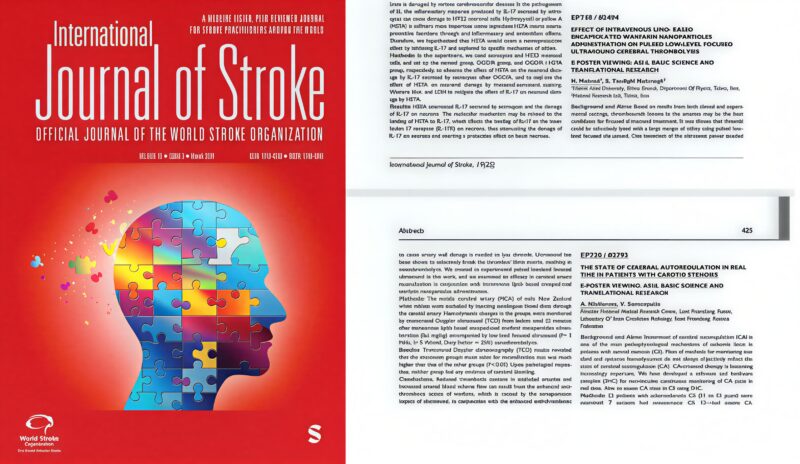
”This article investigates the effects of administering Intravenous Lipid-Based Encapsulated Warfarin Nanoparticles on the enhancement of cerebral clot dissolution using Pulsed Low-Level Focused Ultrasound (PLIFU).
The central concept is that combining a Targeted Anticoagulant Delivery system with focused ultrasound stimulation can accelerate and improve the efficiency of Cerebral Thrombolysis. The lipid nanoparticles provide a stable matrix that encapsulates Warfarin Molecules at the nanoscale, preventing their premature degradation in the bloodstream. This nanostructure improves the Pharmacokinetics and Biodistribution of the drug within brain tissue, which naturally shows limited permeability.
The presence of the Lipid Shell enables more effective interaction with Cell Membranes and the Cerebral Microvasculature. Once in circulation, the nanoparticles are exposed to Low-Frequency Pulsed Ultrasound directed at the occluded region. These acoustic waves generate Micro-Mechanical Oscillations and Stable Cavitation around the clot, increasing Tissue Permeability and enhancing Clot Penetration of the nanoparticles. Mechanical stimulation from PLIFU also induces Fibrin Network Disruption, making the clot more responsive to therapeutic activity.
Encapsulated warfarin is released within the clot according to Controlled Release Kinetics, which boosts Targeted Bioavailability and avoids fluctuations in systemic drug concentration. Warfarin further inhibits the Vitamin K-Dependent Coagulation Pathway, preventing clot reinforcement. The integration of chemical inhibition and mechanical ultrasound stimulation results in a significant Synergistic Effect.
Because PLIFU operates at a very low intensity, it minimizes Thermal Damage to cerebral tissue. Overall therapeutic performance depends on Nanoparticle Delivery Efficiency and Acoustic Pressure Amplitude. Animal studies demonstrate faster and more complete clot degradation when nanowarfarin is combined with PLIFU, and Neuroimaging Analysis confirms improved Reperfusion. Effective system design requires precise control of Nanoparticle Size Distribution and Ultrasound Parameters.
This combined strategy represents a promising approach in Non-Invasive Thrombolytic Therapy, with evidence suggesting improved safety, reduced drug dosage, and enhanced clinical outcomes.”
Keep up with Hemostasis Today.
-
Oct 14, 2026, 07:36Daniel Pereira Monteiro: ASCAT 2026 A Day of Science, Connection and Community
-
Oct 14, 2026, 07:20Rachael Jackman: Understanding Models of Transfusion Medicine at AABB 2026
-
Oct 14, 2026, 07:09Dianne E. van der Wal: A New Chapter in Academia Celebrating a Journey in Research, Teaching and Platelet Science
-
Oct 14, 2026, 06:55Mahdieh Dagina Pedersen: A Meaningful Milestone in Hemophilia A Research and Oral Drug Development
-
Oct 14, 2026, 06:37Neoklis Mparis: Unilateral Adrenal Haemorrhage in Primary Antiphospholipid Syndrome During Bridging Anticoagulation
-
Oct 14, 2026, 06:00Aymen A.: LAAC vs. OAC in Patients with Atrial Fibrillation Including CHAMPION-AF and CLOSURE-AF Trials
-
Oct 13, 2026, 21:05Francisco Chacón-Lozsán: Heparin-Induced Thrombocytopenia – When an Anticoagulant Triggers Thrombosis
-
Oct 13, 2026, 21:04Aref Zribi: Isolated Tumor Thrombus and the Role of Prophylactic Anticoagulation
-
Oct 13, 2026, 21:01Alex Larson: Why Normal Bloodwork Does Not Always Tell the Whole Story