


Understanding Anti-Nuclear Antibodies and Their Role in Autoimmune Disease Screening
Samwel Mikaye, Chief Executive Officer at Samik Medical Center, shared in the Laboratory Professionals International group on LinkedIn:
”Anti-Nuclear Antibody (ANA)
What Are They?
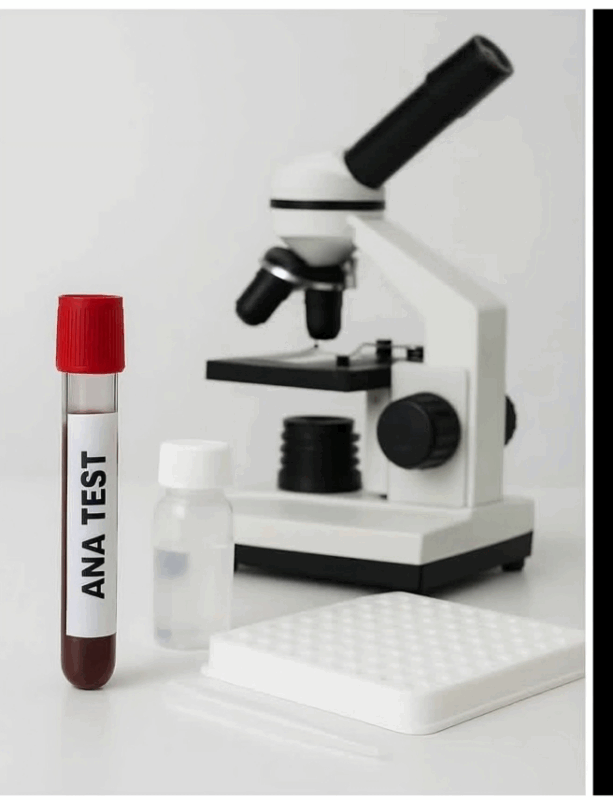
Anti-nuclear antibodies (ANA) are autoantibodies produced by the immune system that mistakenly attack the nucleus of the body’s own cells. The nucleus contains DNA, RNA, and associated proteins, so ANA may target these nuclear components, including nucleotides.
Why Are ANA Tested?
The ANA test is mainly used to screen for autoimmune diseases, especially:
• Systemic Lupus Erythematosus (SLE) — most commonly associated
• Sjögren’s Syndrome
• Scleroderma (Systemic Sclerosis)
• Mixed Connective Tissue Disease
• Autoimmune Thyroid Disorders (sometimes)
• Rheumatoid Arthritis (occasionally)
How Is the Test Reported?
• Results are given as titers, such as 1:40, 1:160, or 1:320.
• A higher titer suggests stronger autoimmune activity.
• The pattern seen in the lab (e.g., homogeneous, speckled, nucleolar, or centromere) may help indicate which autoimmune condition is more likely — but pattern alone is not diagnostic.
Important Interpretation Notes
• A positive ANA does not always mean disease.
• Many healthy individuals, especially elderly or those with infections, may have low-level ANA positivity.
• A negative ANA makes lupus very unlikely, but does not completely rule out all autoimmune disorders.
• Additional specific antibody tests (like anti-dsDNA, anti-Smith, anti-Ro/La) are often required to confirm diagnosis.
Key Takeaways
- ANA are antibodies that react against the body’s own cell nuclei
- Used mainly as a screening tool for autoimmune diseases like lupus
- Positive ANA alone is not enough for diagnosis — symptoms and further tests are essential
- Negative ANA reduces likelihood of lupus significantly.”
Stay updated with Hemostasis Today.
-
Oct 17, 2026, 09:33Robert Lookstein: Mechanical Thrombectomy Shows Functional Benefits in Intermediate-High-Risk PE
-
Oct 17, 2026, 09:18Sarra Hmidi: Tunisia Highlights Thrombosis Prevention on World Thrombosis Day
-
Oct 17, 2026, 09:05Addressing the Hidden Burden of Bleeding Disorders in Women – Hemophilia Society Mumbai Chapter
-
Oct 17, 2026, 08:49Maria Magnusson: Karolinska Experts Explore Gene Therapy in Sickle Cell Disease and Hemophilia
-
Oct 17, 2026, 04:07Weihao Li: Global HEPATIC Registry Findings on Post-Transplant Arterial Thrombosis
-
Oct 17, 2026, 03:56Ghaith Abu-Zeinah: ASH Publishes 2026 Guidelines for Myelofibrosis Management in Blood Advances
-
Oct 17, 2026, 03:48Tristan Siokos: Why Vascular Occlusion Is More Than Just Clots – Breakdown of the 8 Pathways
-
Oct 17, 2026, 02:36Archil Jaliashvili: Oxygen Transport in Capillaries
-
Oct 17, 2026, 02:35Carly Newton: Understanding Access to Red Blood Cell Exchange for People Living With SCD