

Melissa Hollo: Anemia and the Gender Gap in Healthcare
Melissa Hollo, Director of Project Management at hc1 and Licensed Independent Clinical Social Worker, shared a post on LinkedIn:
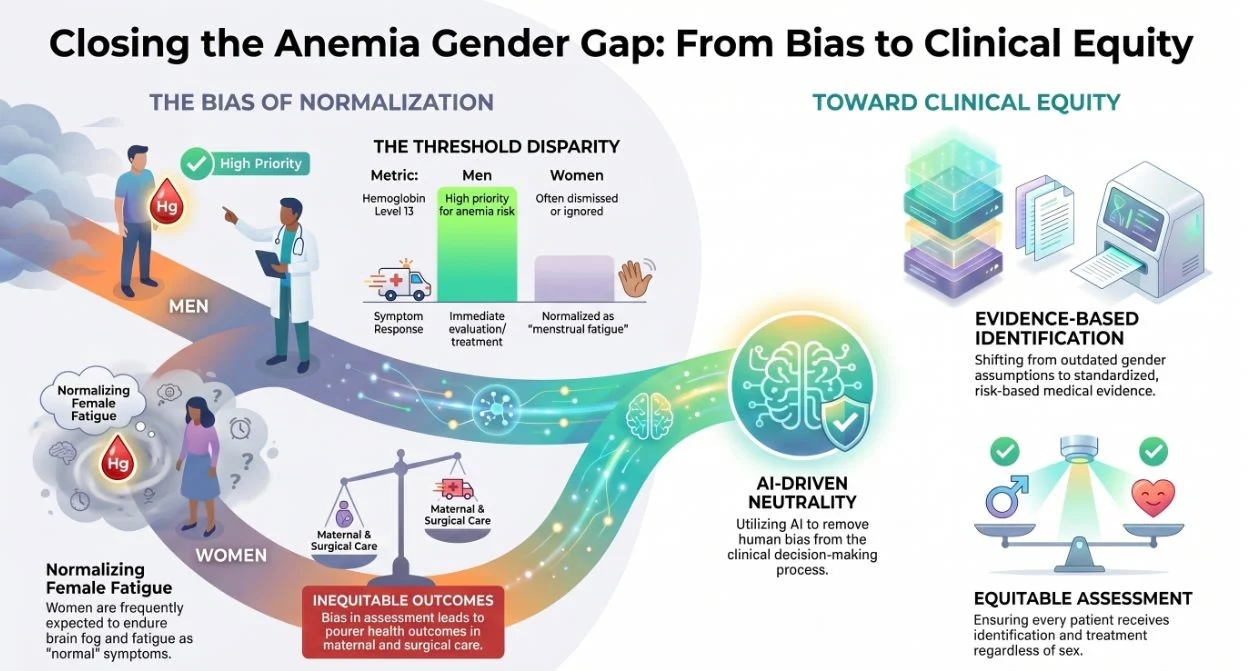
“Why is it still acceptable for women to ‘feel tired’ due to anemia, while men with the same hemoglobin level are more likely to receive evaluation and treatment?
For years, there has been a different thought process surrounding anemia in women compared to men, often attributed to menstruation.
However, should ‘normal’ monthly blood loss mean women are expected to endure lower energy, fatigue, brain fog, or poorer health outcomes?
A crucial question arises: Why do men get to feel better than women?
If a hemoglobin level of 13 is significant for identifying anemia risk and improving outcomes in men, why wouldn’t we assess women with the same standard?
Assessment and treatment should be equitable, regardless of sex.
Early identification is essential, particularly in women’s health, maternal health, and surgical care.
This is where technology and AI can help eliminate bias from clinical decision-making.
Standardized assessments ensure patients are identified based on risk and evidence, rather than outdated assumptions.
Women deserve to feel well too.”
Other posts featuring Melissa Hollo on Hemostasis Today.
-
Sep 20, 2026, 03:58Salih Ehsan: The Complexities of HbF and HbA2
-
Sep 20, 2026, 03:22The Voices of People Living With Bleeding Disorders – EHC
-
Sep 20, 2026, 01:18Sebastian Mafeld: Has 2026 Changed How We Treat Pulmonary Embolism?
-
Sep 20, 2026, 01:16Pall T. Onundarson: DOACs – Monitoring, Tailoring Dose and Identifying Problems
-
Sep 20, 2026, 01:15Thierry Fumeaux: From Efficacy to Effectiveness – The Value of Real-World Evidence
-
Sep 20, 2026, 01:14Said El Shamieh: VEGFA Genetic Variants and Bleeding Risk During Warfarin Therapy
-
Sep 20, 2026, 01:04Omar Danoun: Levetiracetam May Increase Thromboembolic Risk With DOACs
-
Sep 20, 2026, 01:02Mohamed Abo-Aly: Which Antiseizure Medication is Safest for Patients on DOACs?
-
Sep 20, 2026, 00:58Hamza Rafiq: How Does a Deep Vein Thrombosis Become a PE?