

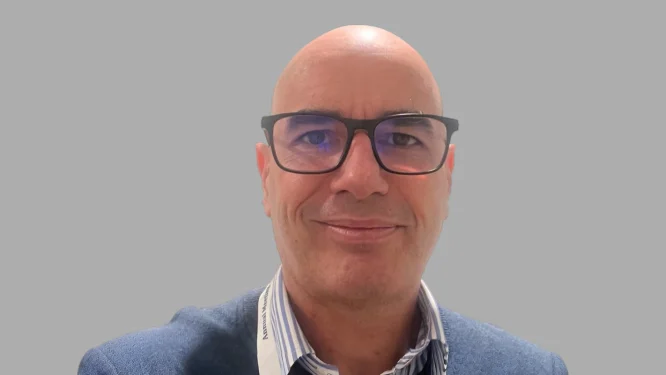
Tomaz Crochemore: Surviving Sepsis Campaign 2026 – Are We Still Underestimating Hemostasis?
Tomaz Crochemore, Intensivist at Hospital Moriah, Fellow at the University of Zurich, shared a post on LinkedIn about recent article by Hallie C. Prescott et al., published in Intensive Care Medicine:
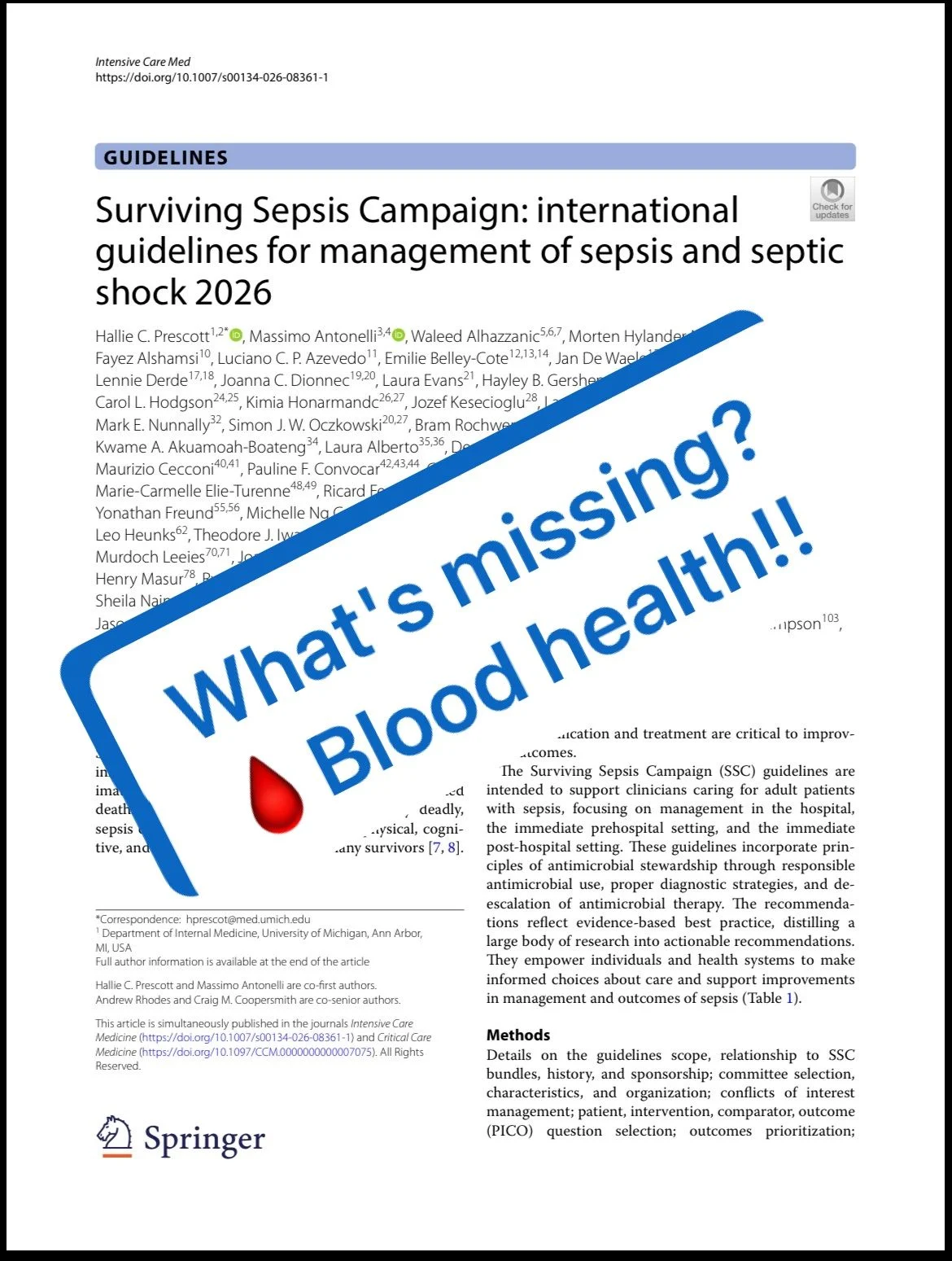
“Surviving Sepsis Campaign 2026: Are we still underestimating hemostasis?
The new Surviving Sepsis Campaign 2026 guidelines represent an important step forward in many aspects of sepsis care.
But when it comes to hemostasis, a critical gap remains.
The guidelines:
- Recommend restrictive transfusion strategies
- Strongly support pharmacological VTE prophylaxis
- Address bleeding risk (e.g., stress ulcer prophylaxis)
However…
They do not:
- Recognize coagulopathy phenotypes (thrombotic vs hemorrhagic)
- Address the dynamic transition from SIC to DIC
- Incorporate viscoelastic testing or platelet function assessment
- Provide guidance for individualized hemostatic therapy
- Integrate thrombosis and bleeding into a unified clinical frameworkIn other words:
Coagulation is still treated as fragmented events, not as a dynamic system.
Yet we know:
Sepsis is not only inflammation.
It is immunothrombosis.
Patients evolve from:
- early hypercoagulability and fibrinolysis shutdown
- to late hypocoagulability and bleedingManaging only one side of this spectrum is no longer enough.
We are entering a new era where:
- Hemostasis must be continuously assessed
- Coagulopathy phenotypes must be identified
- Therapy must be individualized and time-sensitive
This is not just progress.
This is a paradigm shift.
This is Precision Hemostatic Medicine.
This is Patient Clot Management.
Give your patient only what they truly need.”
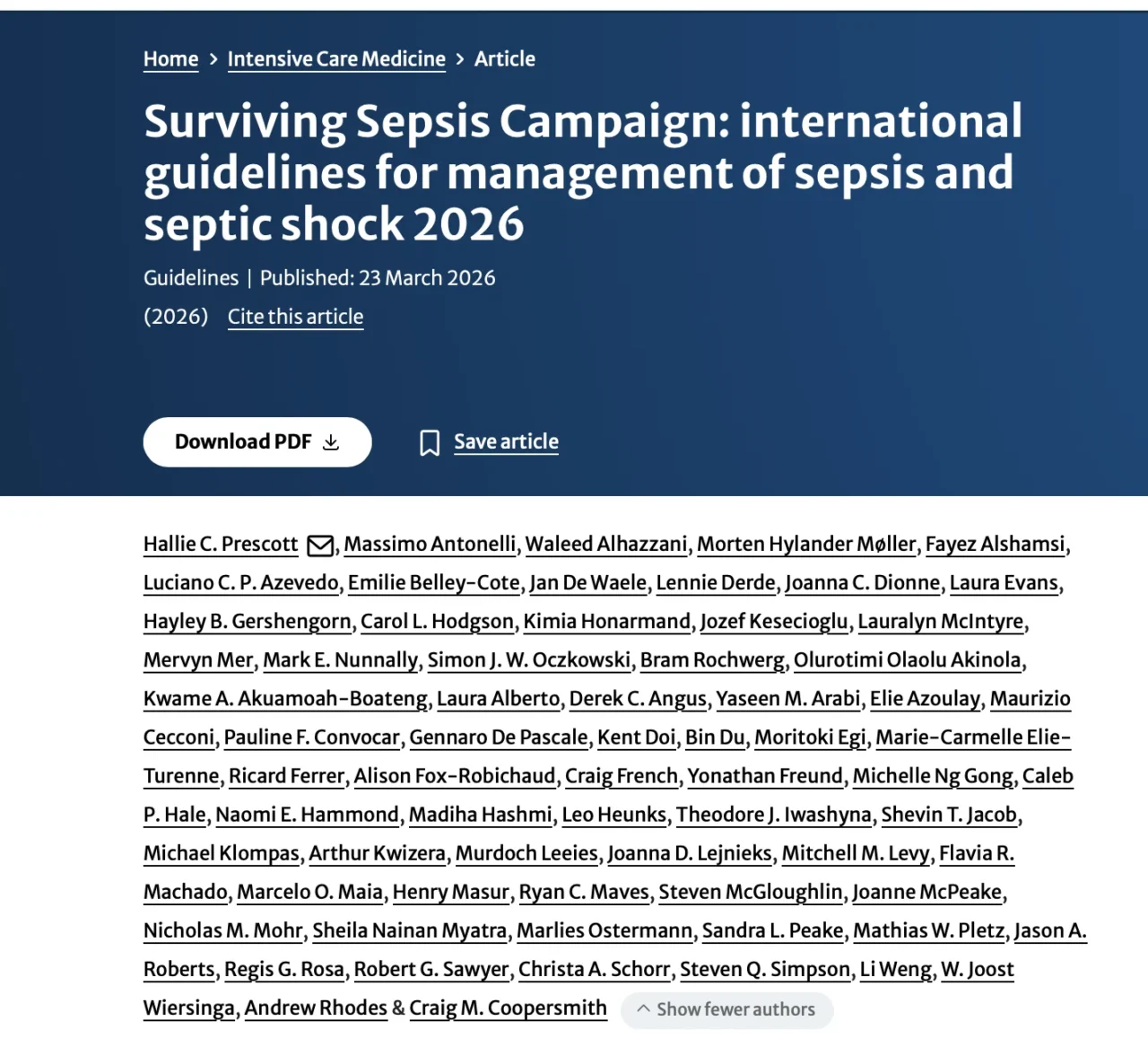
Title: Surviving Sepsis Campaign: international guidelines for management of sepsis and septic shock 2026
Authors: Hallie C. Prescott, Massimo Antonelli, Waleed Alhazzani, Morten Hylander Møller, Fayez Alshamsi, Luciano C. P. Azevedo, Emilie Belley-Cote, Jan De Waele, Lennie Derde, Joanna C. Dionne, Laura Evans, Hayley B. Gershengorn, Carol L. Hodgson, Kimia Honarmand, Jozef Kesecioglu, Lauralyn McIntyre, Mervyn Mer, Mark E. Nunnally, Simon J. W. Oczkowski, Bram Rochwerg, Olurotimi Olaolu Akinola, Kwame A. Akuamoah-Boateng, Laura Alberto, Derek C. Angus, Yaseen M. Arabi, Elie Azoulay, Maurizio Cecconi, Pauline F. Convocar, Gennaro De Pascale, Kent Doi, Bin Du, Moritoki Egi, Marie-Carmelle Elie-Turenne, Ricard Ferrer, Alison Fox-Robichaud, Craig French, Yonathan Freund, Michelle Ng Gong, Caleb P. Hale, Naomi E. Hammond, Madiha Hashmi, Leo Heunks, Theodore J. Iwashyna, Shevin T. Jacob, Michael Klompas, Arthur Kwizera, Murdoch Leeies, Joanna D. Lejnieks, Mitchell M. Levy, Flavia R. Machado, Marcelo O. Maia, Henry Masur, Ryan C. Maves, Steven McGloughlin, Joanne McPeake, Nicholas M. Mohr, Sheila Nainan Myatra, Marlies Ostermann, Sandra L. Peake, Mathias W. Pletz, Jason A. Roberts, Regis G. Rosa, Robert G. Sawyer, Christa A. Schorr, Steven Q. Simpson, Li Weng, W. Joost Wiersinga, Andrew Rhodes, Craig M. Coopersmith
Stay updated with Hemostasis Today.
-
Oct 22, 2026, 18:04Basem Goueli: Blood Clots in the NFL
-
Oct 22, 2026, 17:57Syed Ahmed: Viral Triggers of Immune Thrombocytopenia and Thrombosis
-
Oct 22, 2026, 17:49Valerie Tutwiler: Bridging Engineering and Medicine to Advance Thrombosis Research
-
Oct 22, 2026, 17:41Jesus Ardila Novoa: How Patient Education Can Transform Hemophilia Care
-
Oct 22, 2026, 17:30Filipe Gonçalves: Advancing Bleeding Disorder Diagnosis Through Multidisciplinary Collaboration
-
Oct 22, 2026, 17:17Storage Pool Deficiency An Overview of a Rare Platelet Disorder – EHC
-
Oct 22, 2026, 17:10Matthew Hazell: Optimizing the Use of Rare Red Blood Cell Units
-
Oct 22, 2026, 17:03Smita Patil: New Insights Into Platelet Alpha-Granule Secretion
-
Oct 22, 2026, 16:48Ahmed Alotaibi: Rare Rh Phenotype and Severe Fetal Anaemia