

Apr 1, 2026, 17:15
Chokri Ben Lamine: Differentiating Reactive from Clonal Causes in Adult Neutrophilia
Chokri Ben Lamine, Adult Hematology and SCT Assistant Consultant at Oncology Center of Excellence at King Faisal Specialist Hospital and Research Center, shared a post on X:
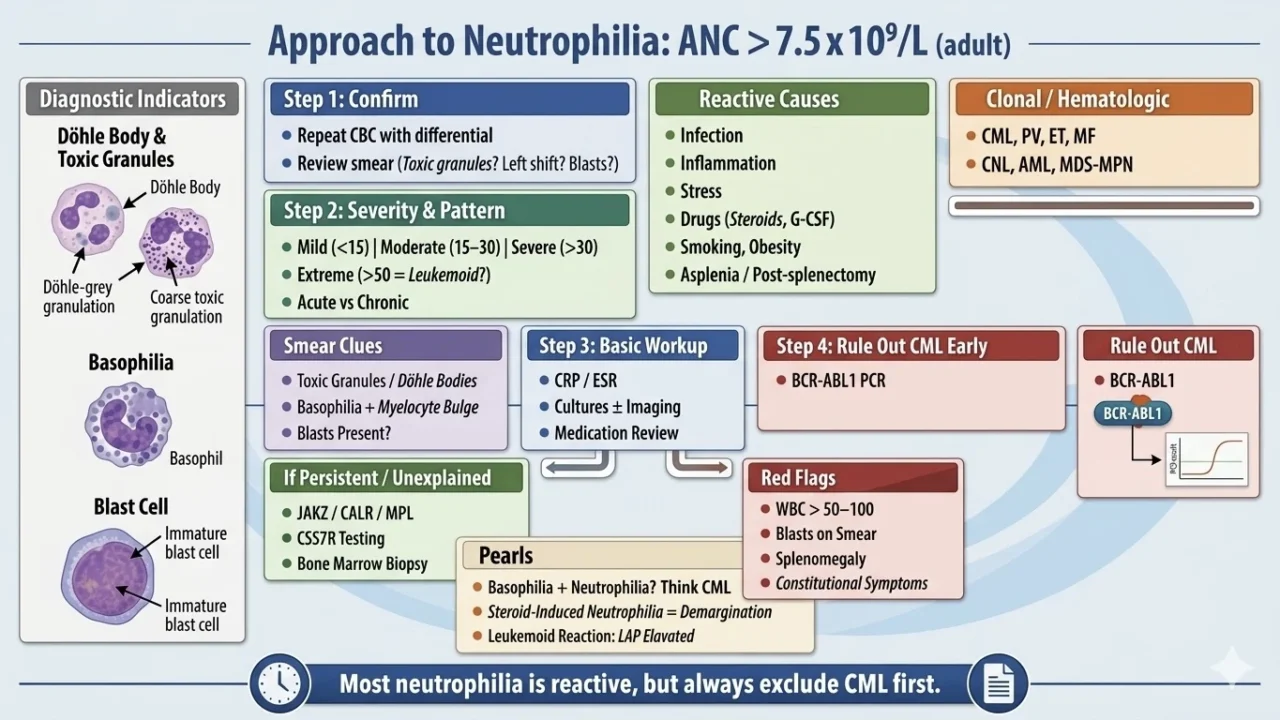
“Neutrophilia approach: ANC greater than 7.5 ×10⁹/L (adult) should be classified reactive vs clonal
Step 1: confirm
- repeat CBC with differential
- review smear (toxic granulation? left shift? blasts?)
Step 2: severity and pattern
- mild (<15) | moderate (15–30) | severe (>30) | extreme (>50 = leukemoid?)
- acute vs chronic
Reactive causes (most common)
- infection (bacterial, severe viral early)
- inflammation (RA, IBD, vasculitis)
- stress (trauma, surgery, MI)
- drugs (steroids, G-CSF, lithium)
- smoking, obesity
- asplenia/post-splenectomy
Clonal / hematologic
- MPN: CML, PV, ET, MF
- CNL (rare, CSF3R+)
- AML with leukocytosis
- MDS/MPN overlap
Smear clues
- toxic granulation/Döhle bodies indicates a reactive
- basophilia with myelocyte bulge then think CML
- blasts raise concern for acute leukemia
Step 3: basic workup
- CRP/ESR
- cultures ± imaging if infection suspected
- medication review
Step 4: rule out CML early
BCR-ABL1 PCR (must not miss)
If persistent/unexplained
- JAK2 / CALR / MPL
- CSF3R if CNL suspected
- bone marrow biopsy
Red flags (urgent)
- WBC greater than 50–100
- blasts on smear
- organomegaly
- constitutional symptoms
Pearls
- neutrophilia with basophilia should be considered CML until proven otherwise
- steroid-induced neutrophilia results from demargination (no left shift)
- leukemoid reaction can mimic leukemia but LAP high
One-liner
most neutrophilia is reactive, but always exclude CML first”
Stay updated with Hemostasis Today.
-
Oct 7, 2026, 16:44Amor Salah: 2026 NCS/SCCM Guidelines for Managing Antithrombotic-Associated ICH
-
Oct 7, 2026, 16:04NETs in Thrombosis: From Mechanism to Therapeutic Target
-
Oct 7, 2026, 15:28Amir Samimi: Prognostic Value of Platelet Count in Resected HNSCC
-
Oct 7, 2026, 15:21Eloïse Laouenan: Bridging Immunity and Thrombosis in MVTE
-
Oct 7, 2026, 15:10Uthra Sundaram: Honouring Donors During International Plasma Awareness Week
-
Oct 7, 2026, 15:04Daniel Victor Ortigoza: Should Frail Older Patients With AF Switch From VKA to DOACs?
-
Oct 7, 2026, 14:53Susan Noone: Donor Turned Recipient Shares Lifesaving Transfusion Story
-
Oct 7, 2026, 14:49Aimee Burtenshaw: The Impact of the Infected Blood Inquiry on Hospital Transfusion Laboratories
-
Oct 7, 2026, 14:41Vikash Jaiswal: Does Timing Matter for Calcium in Pre-Eclampsia Prevention?