


Robin Young: Complex PCI and the Challenge of Balancing Ischemic and Bleeding Risk
Robin Young, Chief Executive Officer at PearlDiver, Founder, Editor and Former Publisher at Orthopedics This Week, shared a post on LinkedIn:
“A recent European Heart Journal randomized study examined the strategy of ‘early escalation, late de-escalation’ in an attempt to thread that needle in some of the highest-risk PCI patients cardiologists treat daily.
The result? Probably not what the authors hoped for.
Complex PCI patients live in two dangerous worlds simultaneously.
Anatomically, they harbor long lesions, bifurcations, left main disease, diffuse multivessel atherosclerosis, and, naturally and too often, diabetes.
Clinically, they are precisely the patients in whom both ischemic and bleeding events carry devastating consequences.
The intuitive solution has long been: deliver potent platelet inhibition when thrombotic risk is highest early after PCI, then ease off later once endothelial healing progresses and bleeding risk accumulates.
This study tested exactly that concept.
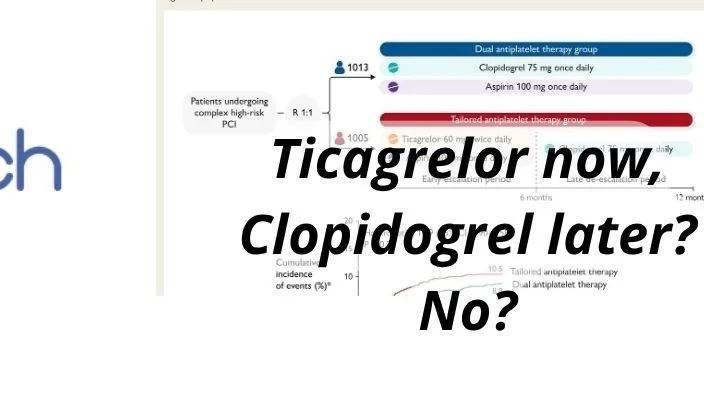
Investigators randomized 2,018 high-risk patients undergoing complex PCI to one of two strategies:
Tailored strategy:
- Early escalation with low-dose ticagrelor (60 mg twice daily) plus aspirin for less than 6 months, followed by late de-escalation to clopidogrel monotherapy after 6 months.
Conventional strategy:
- Standard dual antiplatelet therapy with clopidogrel plus aspirin for 12 months.
The primary endpoint was ambitious and clinically meaningful: a net adverse clinical event composite incorporating mortality, MI, stroke, stent thrombosis, urgent revascularization, and clinically relevant bleeding.
These patients were genuinely high risk:
- 22.6% underwent left main PCI
- 19.5% had complex bifurcation interventions
- 84.1% had diffuse long lesions
- 93.7% underwent multivessel PCI
- 36.7% had medically treated diabetes
The Results: elegant theory, unimpressive outcome
At 12 months, the tailored strategy failed to demonstrate superiority.
The primary endpoint occurred in:
- 10.5% of patients receiving tailored therapy
- 8.8% of patients receiving conventional DAPT
- Hazard ratio: 1.19
- 95% CI: 0.90–1.58
- P = 0.21
No signal of benefit, no statistical win, and certainly no practice-changing triumph.
To read the full review and analysis of this important trial, please go to The Research Coop‘s cardiology Substack page.
While you are there please do subscribe.
To Learn More about The Research COOP.
To Join The Research COOP.”
Stay updated with Hemsotasis Today.
-
Jun 6, 2026, 14:17Danny Hsu: A Practice-Changing Milestone in Managing Post-Thrombotic Syndrome
-
Jun 6, 2026, 13:01Kathleen Freson: αIIbβ3’s Hidden Role in Platelet Production
-
Jun 6, 2026, 12:22Jonas Kingo: Factor XI at the Crossroads of Hormonal Regulation and Thrombosis at ISTH 2026
-
Jun 6, 2026, 12:06Reza Shojaei: Why Dried Plasma May Be the Most Important Plasma Innovation in Decades
-
Jun 6, 2026, 08:25Marina Tarunina: Engineered Platelets From Human iPSCs Support Haemostasis Without Thromboembolism
-
Jun 6, 2026, 08:21Razieh Parizad: Systematic Review Evaluates the Future Role of Factor XI Inhibitors in Stroke Prevention
-
Jun 6, 2026, 08:10Vrinda Trivedi: Hematologic Emergencies and Anticoagulation Strategies Spotlighted at CCCES 2026
-
Jun 6, 2026, 08:02Krisstina Gowin: Could the Gut Microbiome Be the Missing Link in Hematology Outcomes?
-
Jun 6, 2026, 07:59Razan Awan: Large Cohort Study Questions Routine Use of Dual Antiplatelet Therapy After TAVI