


Heghine Khachatryan: Linking Coagulation, Inflammation, and Neurodegeneration In Neuro-Hemostasis Axis
Heghine Khachatryan, Editor-in-Chief of Hemostasis Today, Head of Hemophilia and Thrombosis Center at Yeolyan Hematology and Oncology Center, shared a post on Linkedin:
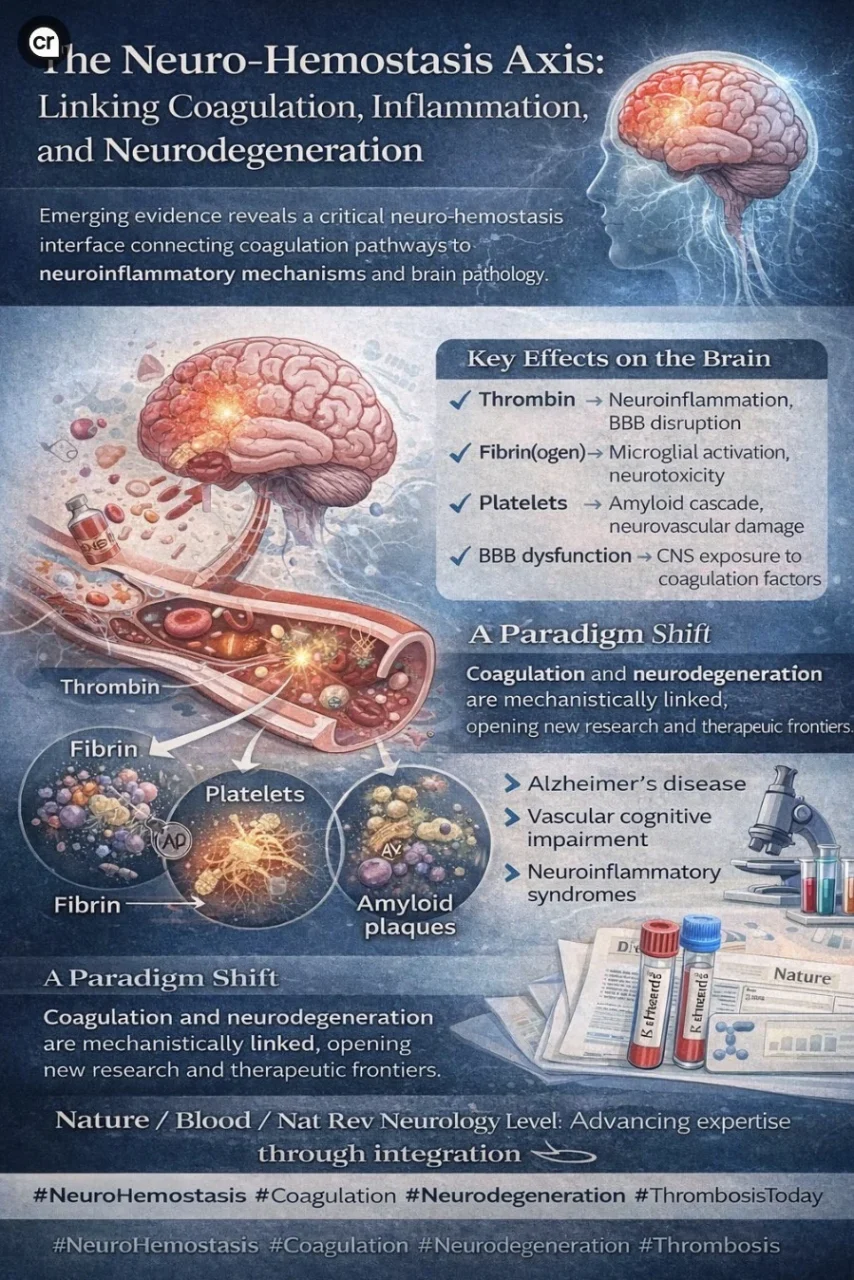
“The Neuro-Hemostasis Axis: Linking Coagulation, Inflammation, and Neurodegeneration
Emerging evidence is redefining our understanding of neurological disease, highlighting a critical and previously underappreciated interface between hemostasis and brain pathology.
The concept of the ‘neuro-hemostasis axis’ reflects a complex, bidirectional interplay between coagulation pathways, vascular biology, and neuroinflammatory mechanisms — positioning the hemostatic system as an active contributor to neurodegeneration, rather than a passive bystander.
Why This Matters
Accumulating data from translational and clinical studies demonstrate that key components of the hemostatic system exert direct effects on neural tissue:
- Thrombin — beyond coagulation, acts as a potent mediator of neuroinflammation, endothelial activation, and blood–brain barrier disruption
- Fibrin(ogen) — deposition within the central nervous system promotes microglial activation and neurotoxic signaling, accelerating neurodegenerative processes
- Platelets — actively participate in the amyloid cascade, contributing to vascular and neurodegenerative pathology
- Blood–brain barrier dysfunction — facilitates the entry of circulating coagulation factors into the CNS, amplifying inflammation and neuronal injury
A Paradigm Shift
This evolving framework challenges the traditional separation between vascular and neurodegenerative disorders.
Instead, it supports a unifying model in which:
Coagulation, inflammation, and neurodegeneration are mechanistically intertwined
This has profound implications for conditions such as:
- Alzheimer’s disease
- Vascular cognitive impairment
- Neuroinflammatory and paraneoplastic syndromes
Clinical and Research Implications
Understanding the neuro-hemostasis axis opens new avenues for:
- Early identification of at-risk patients
- Biomarker-driven stratification (e.g., fibrinogen, D-dimer, thrombin activity)
- Targeted therapeutic strategies modulating coagulation and inflammation
Take-Home Message
The brain is not isolated from the hemostatic system
it is deeply influenced by it.
Recognizing this connection is essential for advancing both diagnostic precision and therapeutic innovation in neurology and hematology.”
Other posts featuring Heghine Khachatryan on Hemostasis Today.
-
Oct 8, 2026, 23:27Shayan Mohammadmoradi: Happy to Be Back at the Midwest Platelet Conference for Its 20th Meeting
-
Oct 8, 2026, 23:18Lorena Arranz: Honoured to Contribute to the 6th Global MPN Symposium
-
Oct 8, 2026, 23:06Denis Oduor: Serving Citizens and Saving Lives Through Blood Donation During National Customer Service Week 2026
-
Oct 8, 2026, 22:51Jan Hartmann: Speaking on Global Trends in Plasma Collection at the 50th Meeting of the Japanese Society of Blood Services
-
Oct 8, 2026, 22:49Akshat Jain: Proud to Announce the Publication of Advances in Sickle Cell Disease
-
Oct 8, 2026, 22:49Ed Shovelin: Extending the Platelet Aggregation Testing Window to 72 Hours
-
Oct 8, 2026, 22:48Abdulla A. Damluji: Anticancer Drugs and Thrombosis Mechanisms, Risk Factors, and Prevention
-
Oct 8, 2026, 22:46Miguel Escobar: My Research on Oral Health and Hemophilia
-
Oct 8, 2026, 22:44ISTH 2027 Abstract Submission Opens November 23